
Brown Fat: More Than the Body's Internal Furnace
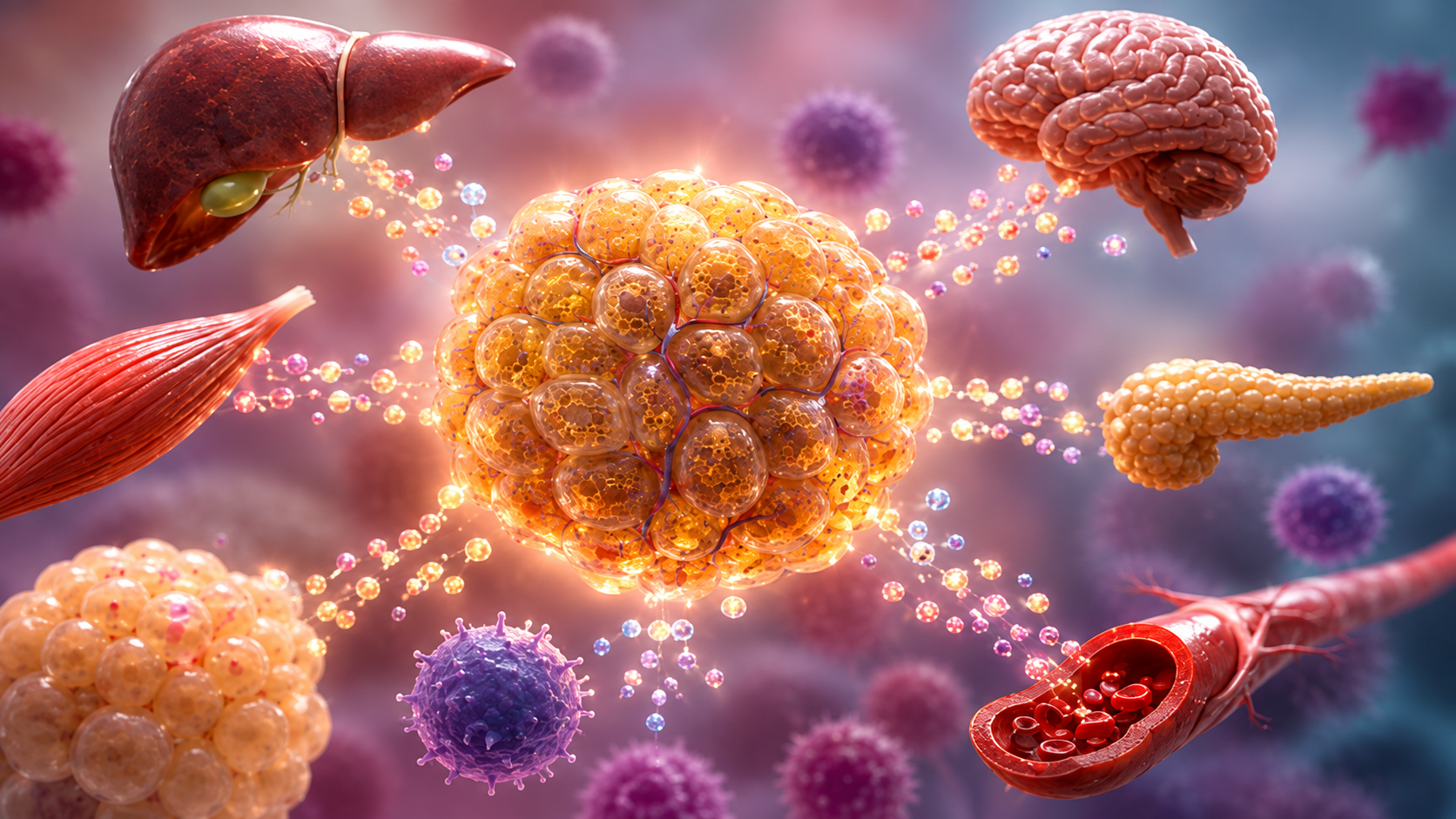
When most people think about body fat, they probably don't picture it doing anything beneficial. Fat is often viewed as tissue whose main job is to store excess calories. But not all body fat is the same.
One special type of fat, known as brown adipose tissue– or brown fat– has long been recognized for its ability to burn calories and generate heat, helping the body stay warm in cold temperatures. For years, scientists believed this was its primary role.
Today, emerging research suggests brown fat may be doing much more.
Rather than acting solely as the body's internal furnace, brown fat appears to function as an active endocrine organ, releasing signaling molecules that communicate with organs throughout the body and may help regulate metabolism, blood sugar, and overall metabolic health.
Not All Fat Is the Same
The body contains several different types of fat, each serving a unique purpose.
White adipose tissue, or white fat, is the type most people are familiar with. Its primary role is to store excess energy for later use.
Brown adipose tissue, on the other hand, is designed to burn energy. Brown fat contains thousands of mitochondria (the structures responsible for producing energy inside cells) which give the tissue its characteristic brown color. These mitochondria contain a protein called uncoupling protein 1 (UCP1) that allows calories to be released as heat instead of being stored or converted into usable cellular energy. This process is known as non-shivering thermogenesis.
For many years, researchers believed brown fat disappeared after infancy. However, advances in medical imaging over the past two decades have revealed that most healthy adults still retain metabolically active brown fat primarily around the neck, collarbone, upper spine, and major blood vessels. Although adults have much less brown fat than infants, scientists now recognize that it remains biologically active throughout adulthood.
More Than Heat Production
One of brown fat's best-known jobs is producing heat when we're exposed to cold temperatures.
When the body senses cold, the sympathetic nervous system releases norepinephrine, which activates brown fat. Brown fat then rapidly burns glucose and fatty acids to generate heat, helping maintain body temperature. Because of this ability to consume both sugar and fat, researchers have become increasingly interested in brown fat as a potential target for improving metabolic health.
Recent research suggests brown fat also behaves like an endocrine organ by releasing signaling molecules known as batokines, adipose tissue (BAT). Rather than acting only within the fat itself, these molecules travel throughout the body, allowing brown fat to communicate with organs including the liver, skeletal muscle, pancreas, blood vessels, brain, and immune system.
This growing understanding has changed how researchers think about brown fat. Instead of viewing it as simply a tissue that burns calories, scientists now see it as an active participant in whole-body metabolism.
Brown Fat's Role Beyond Weight
The signaling molecules released by brown fat appear to influence several important metabolic processes.
Researchers have identified batokines that may help improve insulin sensitivity, regulate blood sugar, support healthy fat metabolism, encourage blood vessel growth within brown fat, and even influence immune function. Other batokines may help protect the liver from excess fat accumulation or promote the development of beige fat—a type of fat that develops within white fat and shares many of brown fat's energy-burning characteristics.
What Could This Mean for Future Health?
Scientists are also studying ways to increase the amount of brown fat or encourage white fat to become beige fat, a process often referred to as "browning." While cold exposure remains the strongest natural activator of brown fat, researchers are exploring additional approaches involving exercise-related signals, hormones, medications, and other compounds that may safely enhance its activity.
Despite this excitement, much of the research is still in its early stages. Adults have relatively small amounts of brown fat, individual responses vary, and scientists are still working to determine how best to activate brown fat without unwanted side effects.
A New Perspective on Fat
For years, body fat was largely viewed as either an energy storage site or a tissue to eliminate. Brown fat is challenging that perspective.
At Katallage Wellness, we believe discoveries like these remind us that the body's systems rarely work in isolation. Organs and tissues are constantly communicating with one another, and understanding those connections may help us better appreciate the complex biology that supports long-term health and wellness.
References
Carpentier AC, Blondin DP, Virtanen KA, Richard D, Haman F, Turcotte EE. Brown Adipose Tissue—A Translational Perspective. Endocrine Reviews. 2023;44(2):143–192.
Martínez de Morentin PB, Villarroya F, Cereijo R. Brown Adipose Tissue as an Endocrine Organ: Updates on BAT Secretome. Hormone Molecular Biology and Clinical Investigation. 2022;44(3):139–150.
Ghesmati Z, Tseng YH. An Update on the Secretory Functions of Brown, White, and Beige Adipocytes. Reviews in Endocrine and Metabolic Disorders. 2024.