
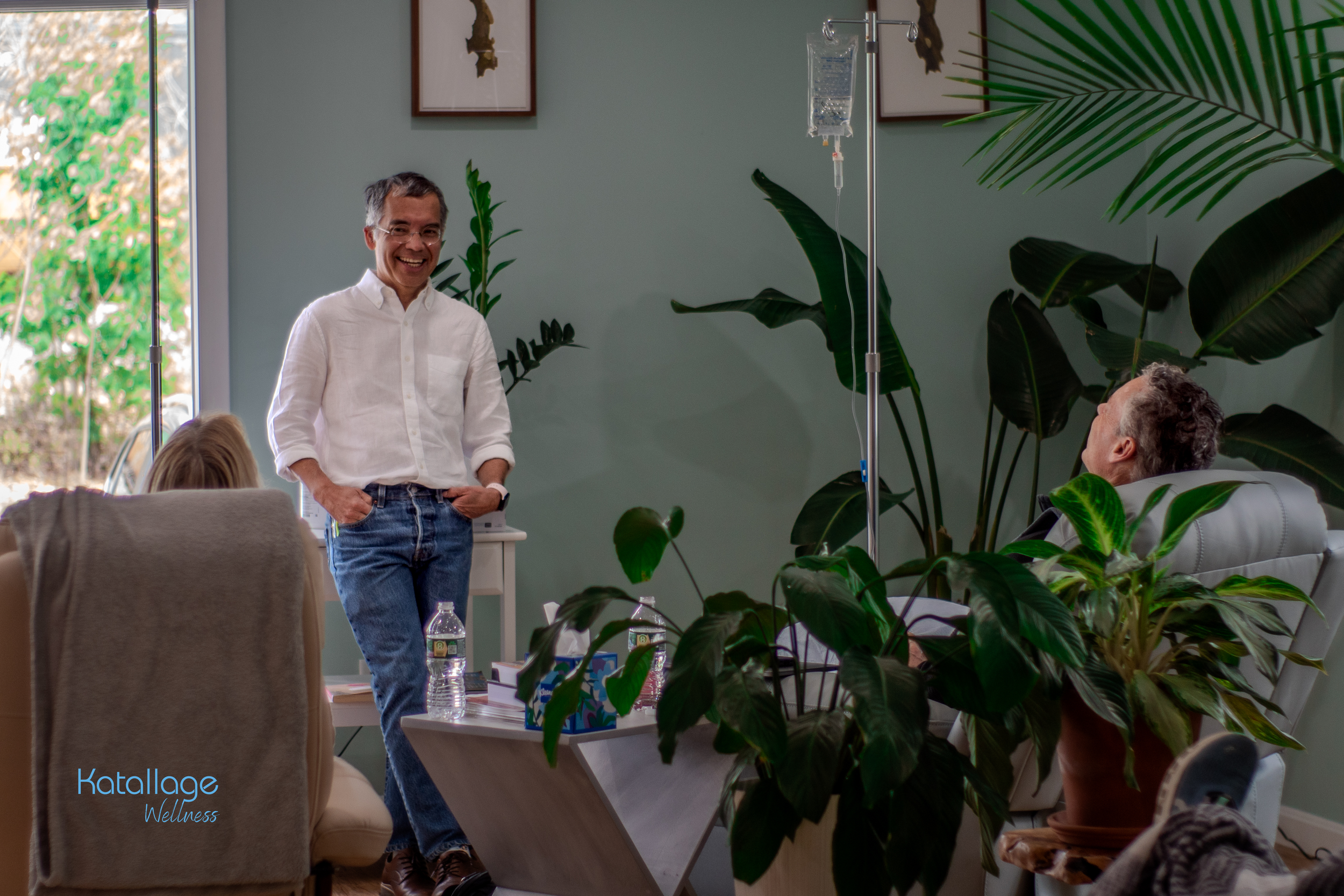
One of the most important questions in integrative medicine is not simply:
“What treatment should I receive?”
It is:
“What level of care do I need at this point in my health journey?”
Patients often come to integrative medicine during a period when something needs high attention. They may be recovering from illness, dealing with a chronic condition, navigating cancer treatment, experiencing fatigue or cognitive changes that seem to have no trigger, correcting nutrient deficiencies, or trying to improve cardiometabolic health.
In those situations, care may appropriately begin with greater intensity.
But good medicine should evolve.
A patient who improves should not automatically remain on the same schedule indefinitely. The therapies, frequency, nutritional strategy, and follow-up that made sense six months ago may not be what that patient needs today.
At Katallage Wellness Clinic, we increasingly think about continuity of care through three phases:
Intensive 2.) Restorative 3.) Maintenance
These are not rigid categories. They are a way of asking a more important clinical question: What does this patient need now?
What is continuity of care in integrative medicine?
Continuity of care means that treatment is not viewed as a series of isolated appointments. Instead, we follow the patient's goals, response, objective measurements, and changing needs over time.
A thoughtful integrative care plan may include nutrition, lifestyle modification, laboratory evaluation, IV nutrient therapy, acupuncture, medical ozone therapy, metabolic strategies, exercise, supplements, or other provider-directed treatments.
But the therapy itself is only one piece.
We also need to know:
Why are we using it?
What are we trying to improve?
How frequently is it needed?
How will we evaluate whether it is helping?
When should we change the plan?
When can treatment become less intensive?
That is where continuity becomes important. The objective is not simply to continue treatment. The objective is to continue making good clinical patient-centered decisions.
Phase One: What is intensive integrative care?
Intensive care is a period of more frequent or focused treatment used when a patient has a specific clinical need or treatment goal requiring closer support.
This does not necessarily mean the patient is critically ill.
In an integrative medicine setting, an intensive phase might be appropriate when a patient is:
actively addressing a complex health condition
undergoing supportive cancer care
beginning a structured metabolic or nutritional program
correcting a significant nutrient deficiency
participating in a brain wellness program
receiving a defined series of provider-directed IV treatments
or working toward a specific measurable clinical goal.
During this phase, visits or treatments may occur more frequently because we are actively trying to influence a particular biological system.
The key word is purpose. An intensive treatment schedule should answer the question:
What are we trying to accomplish?
If we cannot answer that clearly, we should reconsider the plan.
Phase Two: What is restorative care?
Restorative care is the phase in which treatment is directed toward rebuilding, replenishing, recovering, or supporting function after—or alongside—a more intensive period of care.
For some patients, restorative care may involve nutrition and lifestyle changes.
For others, it might include provider-directed nutrient therapy, hydration, acupuncture, exercise progression, targeted supplementation, or other supportive strategies.
At Katallage Wellness Center, examples may include individualized nutrient support involving compounds such as magnesium, B vitamins, taurine, acetyl-L-carnitine, glutathione, or nicotinamide riboside when clinically appropriate.
But restorative care should not become a generic menu of wellness treatments.
The important question is still:
What biological system and cellular response are we trying to support?
For example, a patient experiencing reduced energy may need us to consider several contributors:
sleep,
anemia or iron status,
nutrient intake,
thyroid function,
glucose regulation,
skeletal muscle,
medications,
stress,
physical conditioning,
or cellular energy metabolism.
A restorative therapy makes the most sense when it fits into that larger clinical picture.
Phase Three: What is maintenance care in integrative medicine?
Maintenance care is an individualized, less-intensive phase designed to help preserve progress, monitor important health markers, and provide appropriate ongoing support after a patient has improved or completed a more active treatment phase.
Maintenance does not mean doing nothing.
It also does not mean continuing every therapy indefinitely.
It means finding the minimum effective level of support that makes sense for the individual patient.
A maintenance plan might include:
less frequent IV therapy,
periodic acupuncture,
nutrition follow-up,
continued exercise or metabolic goals,
selected supplements,
periodic laboratory testing,
body-composition monitoring,
cardiovascular or cognitive reassessment,
or simply scheduled clinical follow-up.
Some patients may need treatment monthly. Others may need it seasonally. Some may only need reassessment. And some may no longer need a particular treatment at all. All of those can represent successful care.
How do you know when it is time to transition from intensive treatment to maintenance?
There is no universal schedule. The decision should depend on the condition being addressed, the treatment being used, the patient's response, and the original goals of care. Some of the questions we ask include:
Have the patient's symptoms changed?
If the symptoms that originally brought someone into treatment have substantially improved, continuing at the same intensity may no longer be necessary.
Have objective measurements improved?
Depending on the patient, this might include changes in laboratory markers, blood pressure, glucose regulation, body composition, visceral fat, skeletal muscle, cardiovascular risk markers, or other measurable outcomes.
Has the original treatment goal been achieved?
A therapy should have a reason. Once that goal has been reached, it is appropriate to ask whether the treatment should continue, change frequency, or end.
Is there a reason to continue preventive support?
Some patients have ongoing risks or chronic conditions that justify continued monitoring or periodic treatment. That is very different from continuing something simply because it has become routine.
Do patients need to stay on IV therapy indefinitely?
Not necessarily.
IV therapy can be useful in selected clinical situations, but frequency and duration should be individualized. Some patients may undergo a defined series of IV treatments as part of an intensive or restorative phase. Once that series is completed, we should reassess. The next step might be:
Continue → reduce frequency → transition to maintenance → change the treatment → or stop.
The answer depends on the patient's clinical needs.
At Katallage Wellness Clinic, we want patients to understand why they are receiving an IV—not simply which IV they are receiving.
Is maintenance care the same for everyone?
No. In fact, personalization becomes especially important during maintenance.
One patient may need continued cardiometabolic monitoring. Another may need periodic nutrition follow-up. Someone participating in a brain-health program may need cognitive, metabolic, or vascular reassessment.
A patient receiving supportive oncology care may have a very different maintenance strategy based on their treatment status and oncology plan.
Another patient may simply need help maintaining skeletal muscle, body composition, metabolic health, and healthy routines. Maintenance should reflect the patient—not a predetermined package.
Does integrative medicine mean receiving more treatments?
It shouldn't. One of the misconceptions about integrative medicine is that better care means adding more therapies, supplements, or procedures.
I believe the opposite can sometimes be true. Good integrative medicine should help determine:
What does this patient need?
And equally important:
What does this patient no longer need?
A patient who improves may need fewer interventions. That is not a failure of treatment. It may be evidence that the treatment plan worked.
What should patients ask at the end of a treatment series?
If you are approaching the end of an IV series, acupuncture series, nutritional program, metabolic program, or other structured treatment plan, consider asking your provider:
What has improved?
What have we measured?
What still needs attention?
Do I need to continue at the same frequency?
Can I transition into maintenance?
What should we recheck?
What is the next goal?
Those questions can turn the end of a treatment series into the beginning of a better long-term health strategy.
Intensive 2.) Restorative 3.) Maintenance
At Katallage Wellness Clinic, we believe care should evolve as the patient evolves.
Sometimes a patient needs more intensive support. Sometimes the focus should shift toward rebuilding and restoration. And sometimes the most appropriate plan is simply to maintain progress and monitor the areas that matter.
The goal is not perpetual treatment.
The goal is appropriate treatment, at the appropriate intensity, for the appropriate amount of time.
That is what continuity in integrative medicine means to us.
And as we approach the end of the year, it is an excellent time to ask:
Where am I in my care plan now?
What has changed?
And what should come next?
Complete your care plan. Review your progress. Plan your next phase.
For patients at Katallage Wellness Center in Massachusetts who have completed a treatment series or have not reviewed their care plan recently, November is a good time to schedule a follow-up and determine whether intensive, restorative, or maintenance care is the appropriate next step.